QR codes – a tech essential in textiles and footwear
QR codes have become the practical link between a physical garment and everything a brand wants to say about it. For fashion and footwear brands navigating Digital Product Passport requirements, supply chain transparency, and consumer engagement, the QR code on the label is often the first and most durable touchpoint.
At Trimco Group, we produce QR code labels across formats: printed, woven, RFID-paired, and accessible. Here is what that means in practice.


Printed or Woven?
/ Printed QR code labels
Printing is the most common method and the most flexible. QR codes can be applied to woven label stock, care label stock, hangtags, polybag stickers, and packaging — essentially anything in your trim set that goes through our variable data production.
Code size, contrast, and substrate all affect scan reliability. Our source tagging teams work with brands to define the right specifications before production, so issues are caught before a full run.
/ Woven QR code labels
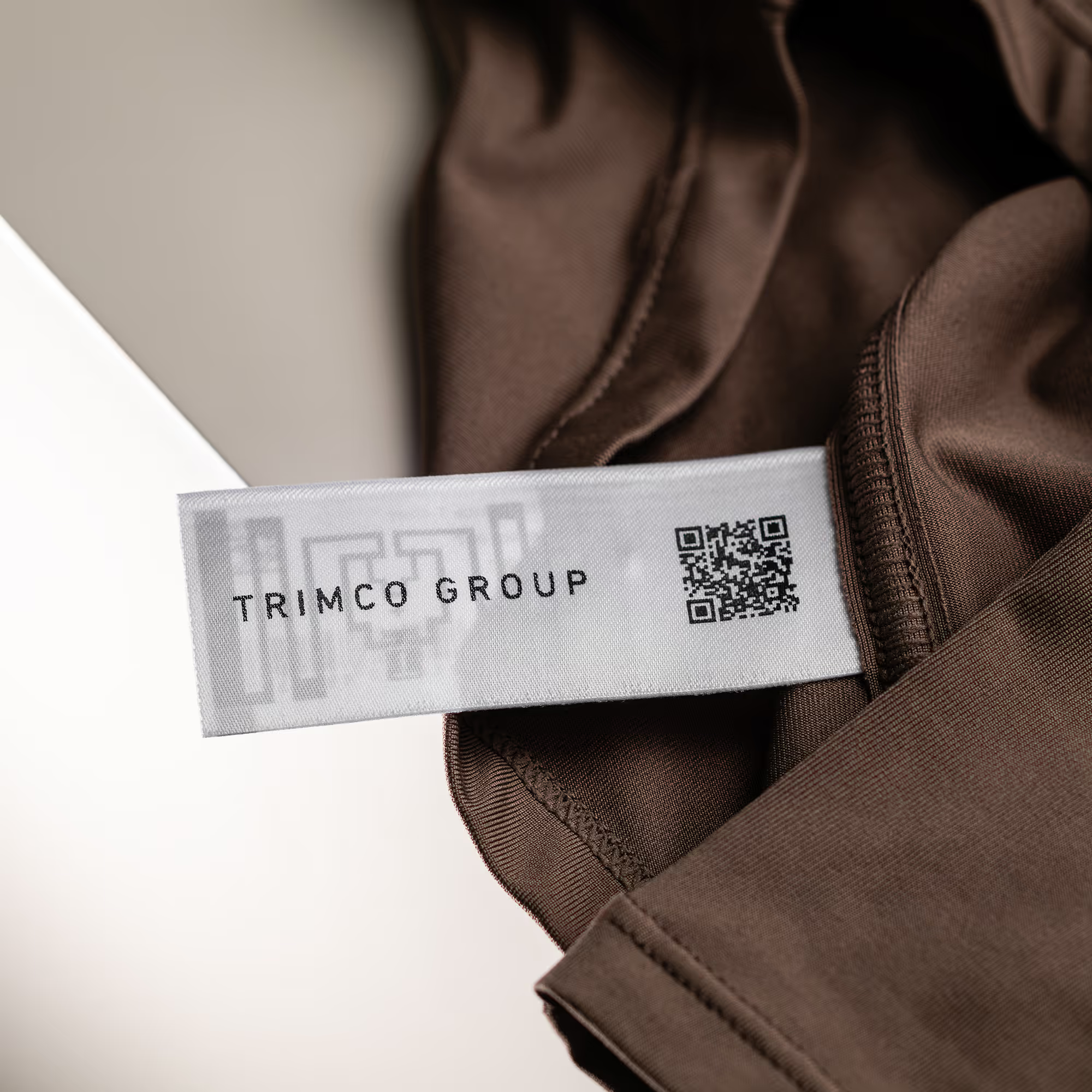
Woven QR codes work differently from printed ones. Rather than printing a code onto a woven label, the QR pattern is woven directly into the label structure. No ink, no surface treatment, no degradation from washing or wear.
We developed and tested woven QR code labels as part of our own trim collections, and they are available for brands. The technical constraints are real: minimum size requirements apply, and not every weave type achieves the contrast needed for reliable scanning. But when the specification is right, the result is a label that carries a scannable digital identifier for the full life of the garment. For products designed for longevity, that durability matters.
If you are considering woven QR labels, our team can advise on what works and share samples from our collection.
“Bridge the gap between fashion and technology, faciliating Digital product passports and revolutionize the future of sustainable fashion with qr codes.

Unique QR Codes: One Code per Garment
A static QR code sends every customer to the same URL. A unique QR code is different — each label carries its own identifier, tied to a specific garment, SKU, or production batch.
That distinction matters for brands building a Digital Product Passport. When every item has its own code, you can attach sourcing data, material composition, care instructions, repair options, and end-of-life guidance to that exact product, not just the style. Unique QR codes also support authentication, resale, and return-to-brand initiatives, because the code stays with the item throughout its lifecycle.
We generate and manage unique QR codes at scale, to match your needs.
QR + RFID
Some brands need QR codes to work alongside RFID, not instead of it. LifeID is Trimco Group's solution series featuring QR codes, NFC and/or RFID, including dual-label solution that combines a QR code and an RFID chip in a single sew-in label.
In the supply chain and at the point of sale, the RFID chip handles inventory tracking. After purchase, it can be removed, leaving the QR code on the garment, active, scannable, and connected to the product's digital identity for the consumer, unless designed to serve circularity purposes. It is a practical way to run one label that serves both the operational side and the DPP side, without asking brands to choose between the two.

Accessible QR codes (AQR), in partnership with Zappar
Standard QR codes require the camera to be close, the angle to be precise, and the user to know where the code is. For people who are blind or have low vision, that is a real barrier.
In March 2026, Trimco Group partnered with UK-based Zappar to bring Zapvision Accessible QR (AQR) technology to apparel and footwear labels. AQR adds a dot-dash pattern around one corner of a standard QR code, allowing accessibility apps like Microsoft Seeing AI and Be My Eyes to detect it from greater distances and read out product information through audio feedback.
The result is one label that works for everyone. Standard cameras scan it as normal. Accessibility apps detect it earlier and guide the user through the product information. No changes to the brand's existing digital setup are needed.
In food and beverage, AQR is already on over five billion packs globally. Adoption in apparel and footwear is only beginning. For brands building a Digital Product Passport strategy, it is a straightforward way to make that investment inclusive from the start.